Smart Insole for Lower Limb Biomechanical Analysis 用于下肢生物力学分析的智能鞋垫
This was my undergraduate research project (Year 2–3) at UCL, which resulted in two first-author publications at IEEE ISCAS. For details, see Publications.
这是我在 UCL 大二至大三期间的本科研究项目,成果发表于两篇一作 IEEE ISCAS 论文。详见发表论文。
Motivation研究动机
Each year over 100,000 knee replacements are performed in the UK, mostly for patients aged 50+, with recovery lasting up to a year. Many older adults also face reduced strength, balance, and mobility — key indicators of frailty that raise the risk of falls. While exercise and rehabilitation help, there is no practical way to monitor movement quality outside the lab, limiting both clinical care and safe home-based recovery.
英国每年进行超过 10 万例膝关节置换手术,患者多为 50 岁以上,康复期长达一年。许多老年人还面临力量、平衡和活动能力下降等问题——这些都是衰弱的关键指标,会增加跌倒风险。尽管运动和康复训练有所帮助,但目前尚无实用的方法在实验室以外监测运动质量,这限制了临床护理和安全的居家康复。
System系统方案
A real-time insole system featuring 253 high-density resistive pressure sensors (4 sensors/cm²) per foot with 60 Hz wireless data transfer. Combined with a custom AI model, the system predicts six lower body joint landmark positions from plantar pressure maps alone — bringing lab-grade biomechanical insight into a wearable form factor.
一套实时鞋垫系统,每只脚搭载 253 个高密度电阻式压力传感器(4 个/cm²),支持 60 Hz 无线数据传输。结合定制 AI 模型,系统仅通过足底压力分布图即可预测六个下肢关节标记点位置——将实验室级的生物力学分析融入可穿戴设备。
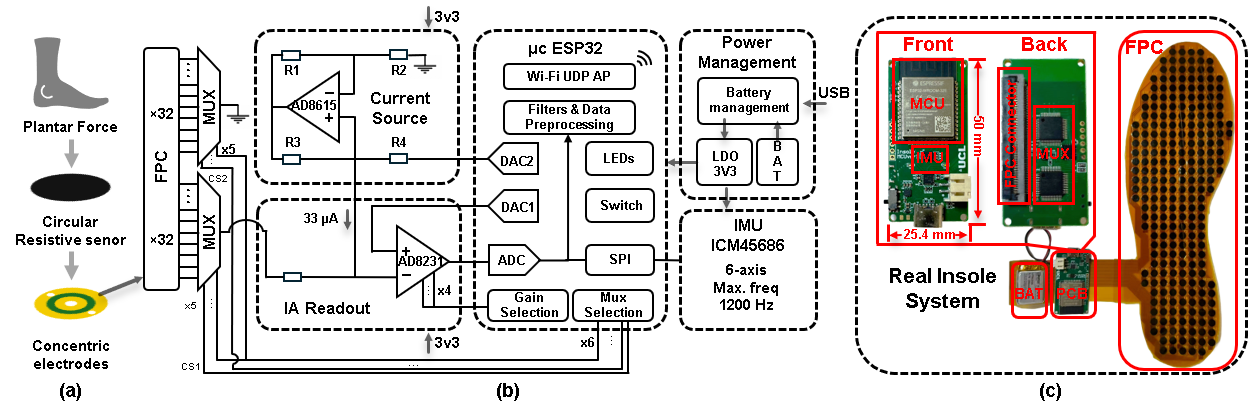
Hardware Iterations硬件迭代
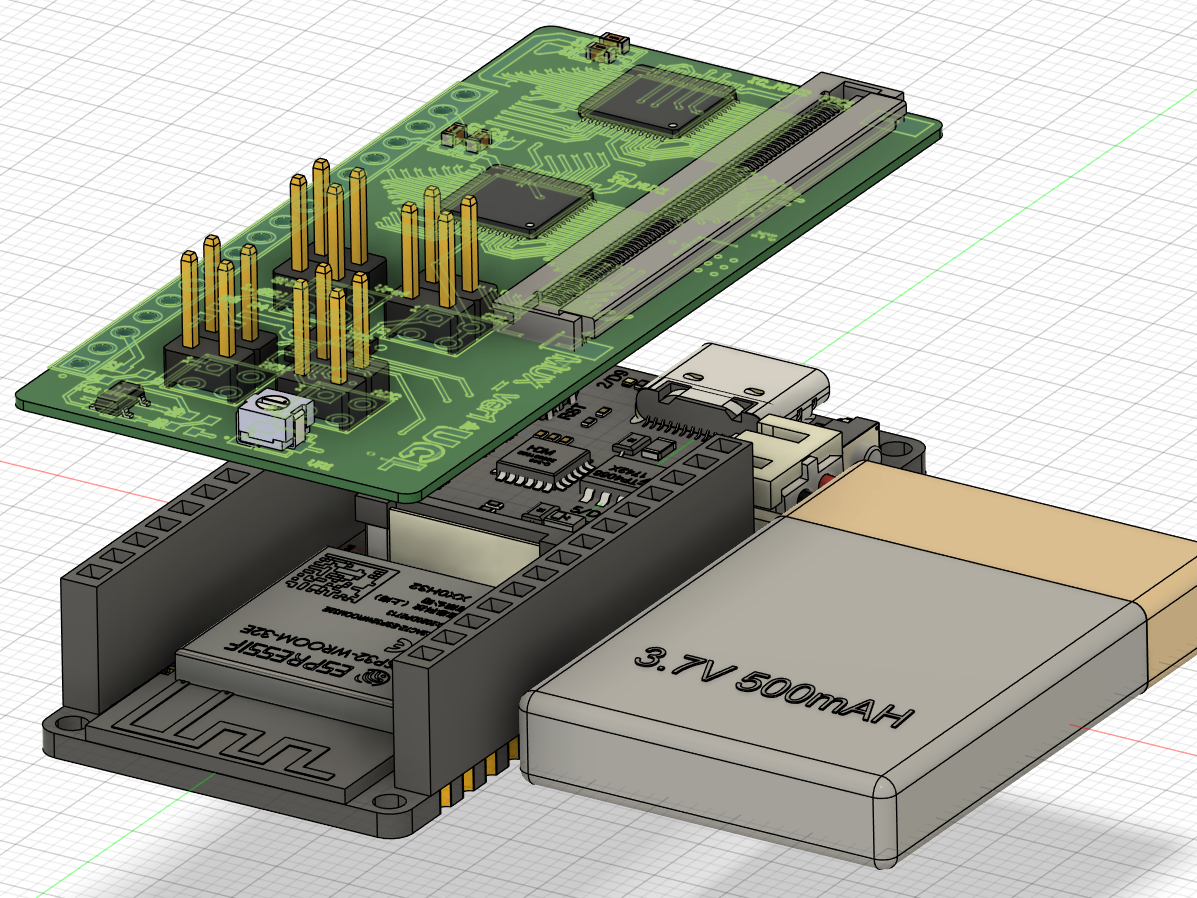
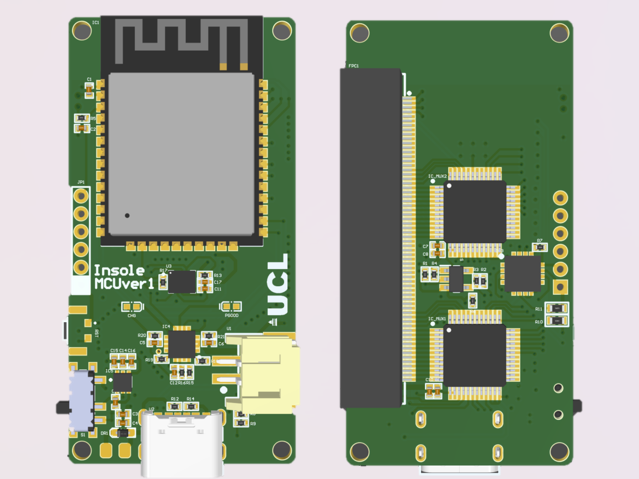
Hardware Development硬件开发